
Yoga for Mental Health: Introduction-
Table of Contents
Lack of Mental Peace in Modern Life

In today’s busy lifestyle, work stress, academic worries, financial pressures, relationship challenges, excessive use of digital screens, constant hectic schedules, and depression are leading to numerous mental health issues, affecting us all. Mental health has become a global concern, and according to the World Health Organization reports, it is still increasing. These problems are not only prevalent among the elderly or adults, but also among young people and adolescents. In such a situation, yoga for mental health is a system that works to calm and balance the body, mind, and spirit.
Yoga for Mental Health is a Powerful Tool to Maintain Mental Balance

In modern life, our conveniences have increased, but mental peace has diminished. We are busy all day, but our minds cannot remain calm. As soon as we lie down at night, our minds become entangled in a variety of thoughts, which leads to anxiety. These factors contribute to a variety of mental problems. Yoga is proving to be an effective and natural remedy for these mental problems. Yoga for mental health balances our mental health while also providing self-awareness, positive thinking, and emotional stability.
Yoga for mental health teaches us to live in the present moment, which is crucial for mental balance. Therefore, even psychologists are recognizing yoga as an effective and natural remedy for improving mental health. Problems like stress, anxiety, depression, anger, and mental imbalance are becoming increasingly common today. Scientific research shows that yoga reduces stress hormones, increases positive hormones, improves sleep, and makes the mind more focused. This is why yoga is being adopted worldwide as a form of mind therapy.
Yoga for Mental Health: What is Yoga?
History of Yoga-

Yoga is an ancient Indian practice, dating back thousands of years. Yoga is mentioned in the Vedas, Puranas, and Upanishads, while Patanjali’s Yoga Sutras gave it a systematic and scientific form. The fundamental purpose of yoga is to develop the ability to live a balanced life by uniting the body, mind, and spirit. A yoga-based lifestyle for physical and mental health has been advocated and developed by Indian sages and acharyas since ancient times. The word “yoga” is derived from the root “yuj,” meaning “to join.” It refers to the union of the soul and the divine.
Yoga’s Principle of Mind-Body Harmony-
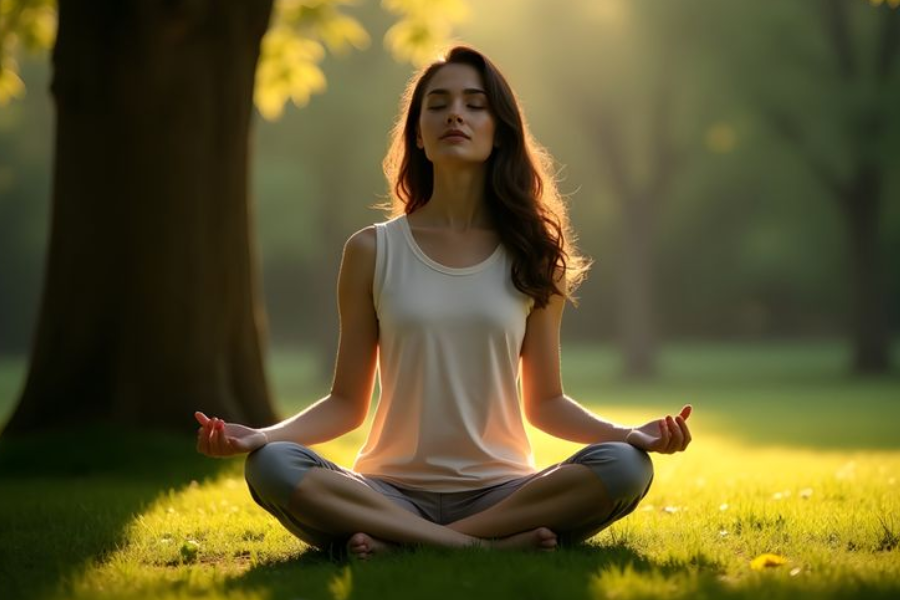
The core principle of yoga is based on the principle of body-mind harmony. It believes that when the body is stable and flexible, the mind naturally becomes calm. Yogasanas strengthen and heal the body, while pranayama controls breathing and slows the mind. This calms the nervous system and reduces stress and anxiety. Meditation, an important component of yoga, increases mental clarity, concentration, self-confidence, and emotional stability. Regular practice of yoga balances brain activity, leaving one feeling calm, composed, and energized from within.
Yoga for mental health is not just physical exercise; it establishes a balance between mind, body, and spirit. Its primary purpose is to heal the body, calm the mind, and provide inner energy. Yoga establishes a harmony between breath, thoughts, and body, which is extremely beneficial for mental health. Practicing yoga brings a deep sense of inner peace. Regular practice of yoga asanas, pranayama, and meditation reduces mental stress and balances emotions. It slows down the pace of our thoughts, reducing overthinking.
Modern science also acknowledges the effectiveness of yoga. Yoga is an essential and integral part of a healthy life. Numerous studies have shown that yoga reduces stress hormones, improves sleep quality, increases self-confidence, and cultivates a positive mindset. Thus, yoga for physical and mental health is a unique blend of ancient wisdom and modern science, proving highly effective in improving mental health. Through this practice, we can make our lives healthy, successful, and joyful.
Purpose of the Blog-
Through this blog, we will explore how yoga improves mental health, which yoga asanas and pranayama help reduce stress, anxiety, and depression, why meditation and mindfulness are essential, and how beginners can begin yoga. We will also explore how incorporating yoga into your lifestyle can create a positive impact on the mind, body, and emotions.
If you seek mental peace, a sense of calm, or balance in your life, this blog is extremely useful. In the coming sections, we will explore every aspect of yoga in detail, from its scientific benefits to simple exercises, so you can make your journey to mental health a smooth and positive one.
Yoga and Exercise e-Book, How to Get It?
If you want a yoga and exercise e-book, you can get it from the website vijaybooks.store and practice yoga and exercise from the comfort of your home. Apart from this, there is another website, yoga.ayush.gov.in, which is a government website of India.
There are other blogs available similar to this blog.
Yoga for Mental Health: Understanding and Identifying Mental Health Issues-
Understanding and identifying mental health issues is crucial within yoga for mental health, as stress, anxiety, depression, and overthinking impact the body and mind.
Definition of Mental Health-
Mental health is a state in which a person is emotionally balanced, mentally clear, and behaviorally competent. This state not only involves the absence of mental illness, but also the ability to face life’s challenges, maintain a positive mindset, and have the ability and clarity to make even the most important decisions in daily life. Mental health provides a person with better sleep quality, activity, harmony, creativity, and stability.
However, in modern lifestyles, changing circumstances and ever-increasing responsibilities affect mental balance. Mental stress has become a common problem today, arising from work pressure, financial worries, relationship complexities, academic burden, uncertainty, and other factors. Similarly, anxiety often arises from a person’s worry and insecurity about their future, while depression is associated with long-term psychological burden, loneliness, and emotional imbalance. Overthinking occurs when one thinks about something repeatedly and keeps the mind constantly active.
Body and mind complement each other-
The body and mind are complementary and inextricably linked. When the mind is unstable, the body experiences fatigue, pain, appetite problems, insomnia, or weakness. Similarly, physical illness affects the mind, leading to irritability, restlessness, and emotional imbalance. Therefore, physical and mental health are not separate entities but two sides of the same coin.
In today’s times, mental health is as important as physical health. Problems like stress, anxiety, depression, anger, and mental imbalance are becoming increasingly common. Mental problems not only affect our thinking, performance, and relationships, but also make the body sick.
Early Signs of Mental Disturbance-
Early signs of mental imbalance can include persistent fatigue, frequent distractions, sleep problems, mood swings, lack of interest in work, social distancing, and overreacting to small things. Recognizing these signs is crucial, and only by understanding them early can one protect one’s mental health.
Yoga for Mental Health: Effective and Perfect Yoga Asanas-
Certain yoga postures for mental health play a particularly important role in improving our mental health. These postures calm the mind, reduce mental stress, and improve concentration and sleep quality. Key yoga postures for mental health that are helpful in strengthening mental health include breathing exercises, pranayama techniques, meditation exercises, and specific relaxation postures. Below are some effective and effective yoga postures for mental health that are considered helpful in improving mental health.
1. Balasana-
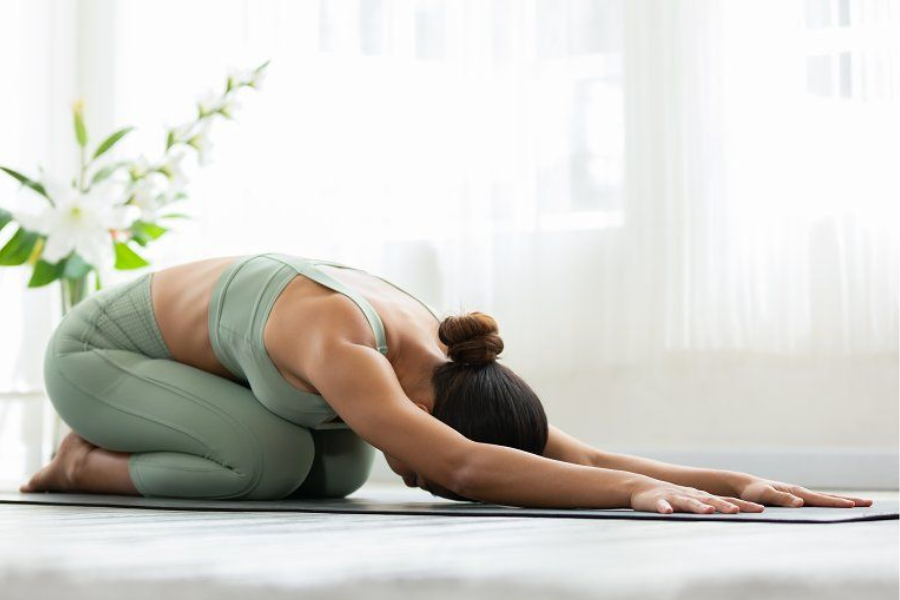
Balasana is a relaxing yoga pose for mental health in which a person sits on their knees, bends forward, stretches their arms forward, and places their forehead on the ground. This helps reduce stress and relieve stiffness in the back and shoulders.
Method-
First, sit in Vajrasana (kneeling position), bending their body forward, placing their forehead on the ground, and placing both hands in front of them, or palms down, on the ground. Close your eyes and breathe deeply. Sit in this posture for 5 minutes.
Benefits-
Balasana:
- Brings peace to the mind.
- Relieves anxiety and fatigue.
- Relieves negative thoughts.
- Calms the mind.
This yoga posture is considered extremely important for mental health. It is considered both important and easy.
2. Meditation in Sukhasana-
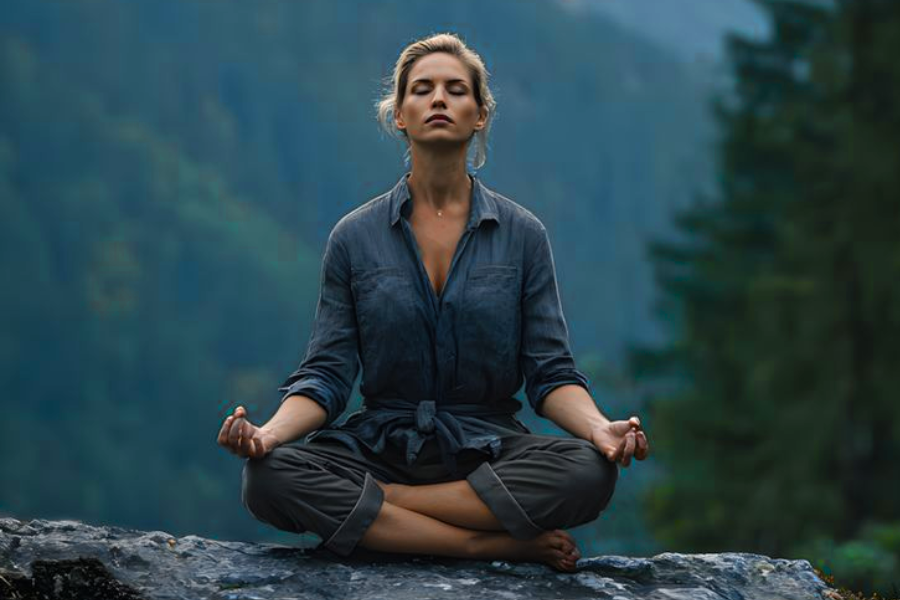
Sukhasana is a simple and effective yoga posture for mental health that anyone can easily perform. In this posture, one sits cross-legged on the floor, with the back straight and hands on the knees. This posture is suitable for meditation, prayer, and peace practice. It provides physical and mental peace and increases self-awareness.
Method-
In this posture, sit cross-legged on the floor in a quiet, clean, and airy space, with both legs bent. Straighten your back and breathe deeply. Close your eyes in Gyan Mudra or Chin Mudra, and completely relax your body. Inhale and exhale deeply, slowly. Observe your breath and thoughts. If desired, chant the word ‘Om’. Initially, practice this posture for 5–10 minutes. Gradually increase to 20–30 minutes.
Benefits-
This yoga posture:
- Brings mental peace, clarity, and stability.
- Reduces mental stress.
- Increases the power to concentrate.
- Gets rid of negative thoughts.
- Increases concentration.
This yoga posture is considered extremely important for mental health.
3. Pada-Hastasana-
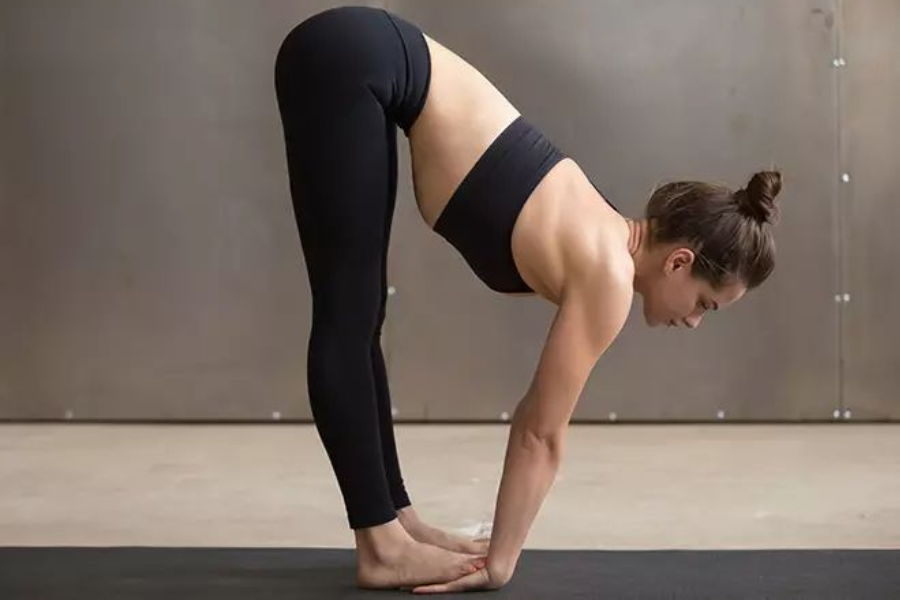
Under yoga for mental health, Pada-Hastasana is a yoga posture that helps build body flexibility and improve digestion. In Sanskrit, ‘pada’ means ‘foot’ and ‘hasta’ means ‘hand’, meaning ‘the posture of holding one’s feet with the hands’.
Method-
While slowly exhaling, bend your upper back simultaneously and touch the ground near your feet with both hands. Try to touch your head between your knees as much as possible. But be careful not to bend your knees. Do as much as you comfortably can. Regular practice normalizes the condition.
Benefits-
Pada-Hastasana
- Eliminates air-related disorders.
- The nadis (nerves) like Ida and Pingala are strengthened.
- Oxygen is supplied to the brain.
- Mental peace and blood pressure are controlled.
- Stress is reduced, and concentration and memory power are increased.
- Lung function is improved.
- All stomach and abdominal disorders are eliminated.
4. Setubandhasana-
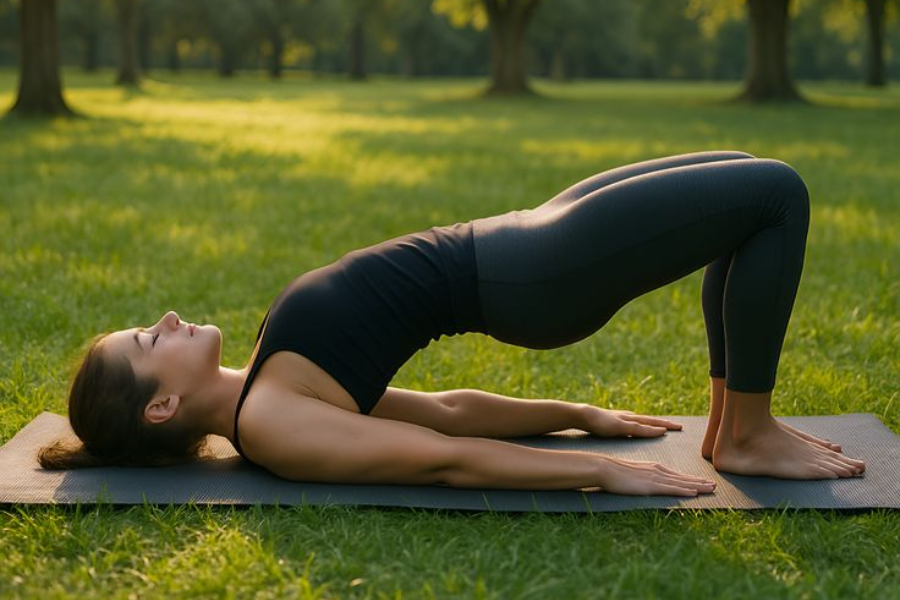
In yoga for mental health, Setubandhasana (Bridge Pose) forms the body in the shape of a bridge, hence its name. This is a very beneficial yoga asana for the back, strengthening the spine, chest, and thighs.
Method-
In this asana, first lie down in Shavasana (on your back). Keep your arms straight and palms facing the ground. Bend both knees and place your feet on the ground. Both feet should be parallel to the hips, with the heels touching the buttocks. Using the palms of your hands, slowly raise your hips until the body forms a bridge from the neck to the knees.
Leave your hands extended on the floor, or you can fold them under your back and press them into the floor. Hold this position, depending on your ability. Focus on your breathing and your stomach. Then, slowly lower your back to the floor and relax in Shavasana.
Benefits-
Setu Bandhasana:
- Relieves stress, depression, and fatigue.
- Increases flexibility and strength of the spine.
- Activates the thyroid gland.
- Improves lung, respiratory, and digestive functions.
- Provides relief from menstrual pain in women.
- Relieves stress, depression, and fatigue.
Precautions-
Do not practice this asana if you have severe back or neck pain. Consult a yoga therapist for high blood pressure or migraines. Pregnant women should do this asana only under the supervision of a trained yoga teacher.
5. Uttanasana-
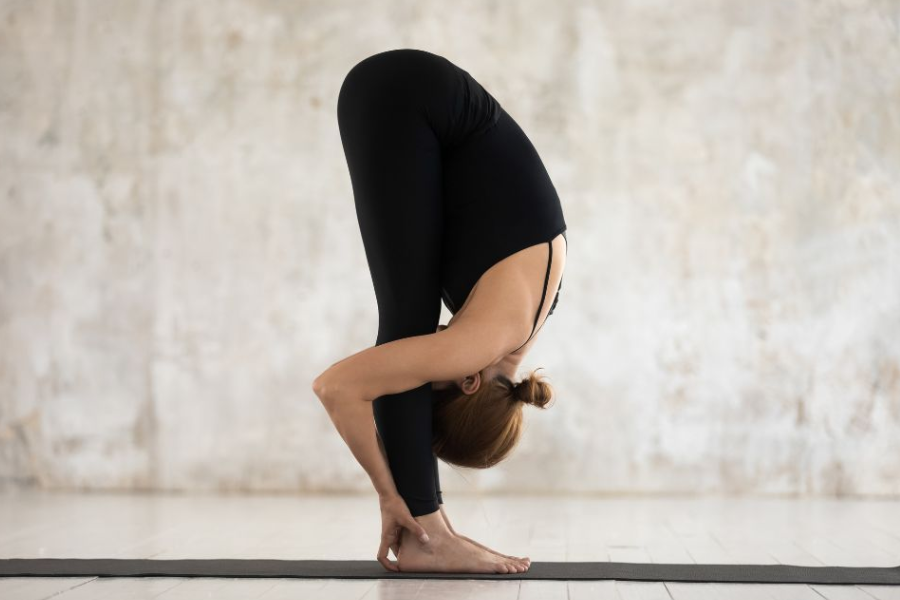
Uttanasana, also known as ‘Standing Forward Bend’, is a powerful pose of yoga for mental health that instantly calms the mind by increasing blood flow in the body. This asana is especially helpful in reducing stress, fatigue, and mental stress.
Method-
First, stand straight with your feet hip-width apart. Exhale, slowly bend forward, and bring your head toward your knees. Place your hands on the ground or hold your ankles, as convenient. Relax your neck and continue breathing deeply. Hold this position for 20-40 seconds, then slowly stand up. The purpose of this asana is to calm the mind by increasing blood flow in the body.
Benefits-
Regular practice of Uttanasana:
- It calms the nervous system.
- Helps increase mental clarity and emotional balance.
- Reduces anxiety, restlessness, and mental stress.
- Releases stiffness in the spine, hamstrings, and shoulders, making the body feel lighter and the mind calm and stress-free.
- Increases blood flow to the head, instantly refreshing and relaxing the brain.
6. Marjari-Vyaghrasana-

Marjari-Vyaghrasana, also known as Cat-Cow Pose, is a gentle yoga for mental health that flexes the spine and instantly calms the mind. This asana loosens stiffness in the bones of the body. It is also considered highly effective in relieving mental fatigue.
Method-
First, come into a tabletop pose on your hands and knees. Place your palms under your shoulders and your knees under your hips.
Marjari (Cat Pose)- Exhale, lift your back upwards, and bend your head downwards.
Vyaghra (Cow Pose)- Inhale, relax your back downwards, and lift your face upwards.
Repeat these two postures slowly 8-10 times, synchronizing them with your breath.
Benefits-
Regular practice of Marjari-Vyaghrasana:
- This asana loosens stiffness in the spine, instantly making the body feel lighter.
- Synchronizing your breathing calms the mind and relieves anxiety, stress, and restlessness.
- Regular practice of Marjari-Vyaghrasana balances the nervous system, improves mood, and increases mental clarity.
7. Shavasana-

Shavasana is a very calming and relaxing yoga for mental health. In this posture, the body is completely still and still, like a corpse. Also known as the “corpse pose,” it is typically performed at the end of a yoga practice to allow the body and mind to fully relax.
Method-
In this posture, lie flat on your back. Spread your legs slightly and let your toes point outward. Place your hands slightly away from your body, palms facing upward. Close your eyes and completely relax your body. Allow your breathing to flow normally, without any control. Gradually release tension throughout your body, from head to toe. Remain in this position for 10 to 15 minutes.
Benefits-
This asana-
- Relieves mental stress and anxiety.
- Regulates blood pressure.
- Improves focus and concentration.
- Relieves fatigue and restores energy.
- Provides complete relaxation to the body.
Yoga for Mental Health: Pranayama Practices for Mental Health-
Under Yoga for Mental Health, Pranayama or other practices for mental health or purifying the mind are as follows:
1. Pranayama: Anulom-Vilom-
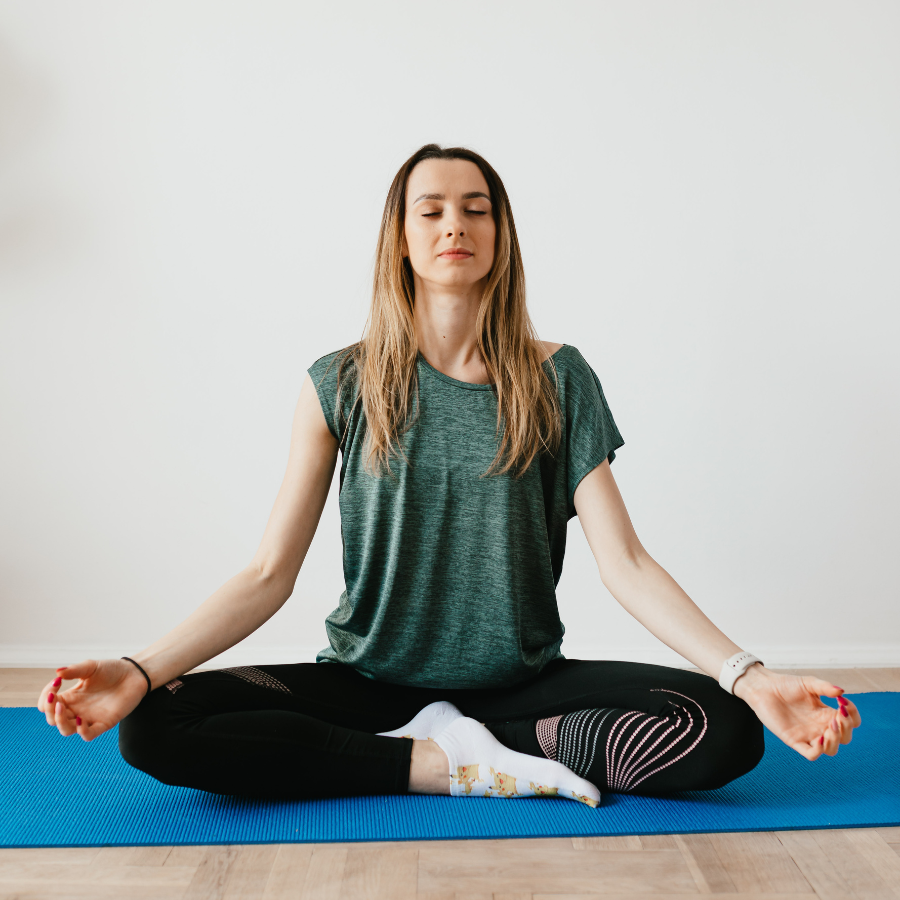
This yoga asana (pranayama) is a highly effective breathing technique that helps balance the body, mind, and spirit. It is also called Nadi-Shodhan Pranayama because it purifies the body’s nadis, or energy-carrying nerves. This method of Anulom-Vilom is also an important and effective part of yoga for mental health.
Method-
In this asana, sit cross-legged on the floor in a quiet, clean, and well-ventilated area. Straighten your back and inhale deeply. Close your eyes in Gyan Mudra and relax your body completely. Inhale and exhale deeply, slowly. Now, bend the thumb and ring finger of your right hand. Using these two fingers, close your nostrils alternately (close the right nostril with the right thumb and the left nostril with the ring finger). Now, inhale deeply through the left nostril, exhale through the right nostril, then inhale through the right nostril and exhale through the left. This is called ‘one cycle’.
Initially, do this for 5–10 minutes. Gradually, you can extend it to 20–30 minutes. Inhale and exhale deeply, slowly, and without making any sound. Do not exert any force.
Benefits-
- Oxygen is supplied to the brain.
- Mental peace and blood pressure are controlled.
- Stress is reduced, and concentration and memory power are increased.
- Lung function is improved.
- Balance is maintained between the two parts of the body (Ida and Pingala).
This yoga posture is considered extremely important for mental health.
2. Bhramari Pranayama-

Bhramari Pranayama is a powerful breathing technique that helps calm the mind, reduce stress, and increase mental clarity. Its name derives from “Bhramari,” meaning “bumblebee,” because the exhalation produces a buzzing sound like that of a bumblebee. Bhramari Pranayama is an effective form of yoga for mental health.
Method-
In Bhramari Pranayama, first sit in Sukhasana or Vajrasana. Close your eyes and breathe normally for a few moments. Then, sit in Shanmukhi Mudra, with your hand positioned in the Shanmukhi Mudra, placing the index fingers of both hands on your earlobes. If desired, close your eyes with your other fingers. Now, slowly inhale deeply through your nose, keeping your mouth closed while exhaling, and make a bee-like humming sound. This sound should resonate in the throat or head for a long time. The vibrations of this sound calm the brain. Repeat this 8-10 times.
Benefits-
This yoga asana:
- Relieves stress, anger, anxiety, and high blood pressure.
- Improves sleep, beneficial for insomnia.
- Cools the brain and increases concentration.
- Relieves headaches and migraines.
- Calms the thyroid and nervous system.
- Reduces anger and anxiety.
- Beneficial for throat-related problems.
This yoga asana is considered extremely important for mental health.
Precautions-
- Do not strain while exhaling.
- Do not perform this pranayama if you have an ear infection.
Special Tips-
Performing Bhramari Pranayama before bed at night improves mental peace and sleep quality.
3. Kapalabhati Pranayama-
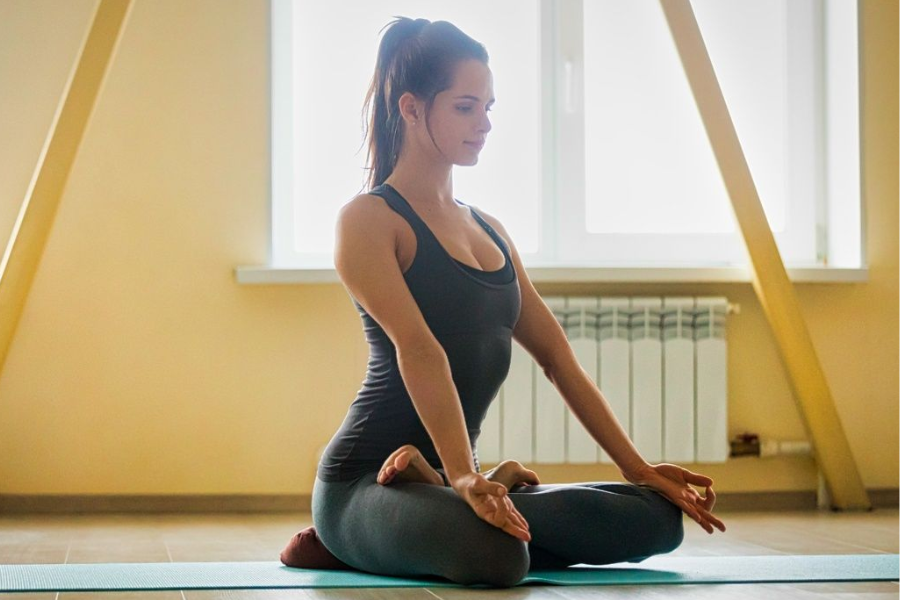
Kapalabhati Pranayama is a powerful and energetic yoga breathing exercise, named after ‘kapala’, meaning forehead, and ‘bhati’, meaning radiance or light. It means a breathing exercise that clears, activates, and sharpens the mind. This breathing exercise is considered best for the lungs, brain, and digestive system. It is also extremely beneficial for mental health.
Method-
First, sit in Sukhasana or Padmasana with your spine straight. Inhale deeply and then exhale rapidly. While exhaling, pull your abdomen inward. This will automatically fill your body with breath, focusing solely on exhaling. Perform 30-50 rounds and gradually increase the duration.
Benefits-
Regular practice of Kapalabhati-
- Helps strengthen abdominal muscles, improve digestion, and reduce excess body fat.
- It purifies the blood, increases lung capacity, and improves oxygen flow in the body.
- On a mental level, it removes laziness, activates the brain, and improves concentration.
- It reduces negative thoughts, providing a calm, clear, and energetic mind.
- It reduces mental stress, fatigue, and overthinking.
- It refreshes the entire body and helps bring positivity into life.
4. Ujjayi Breathing-
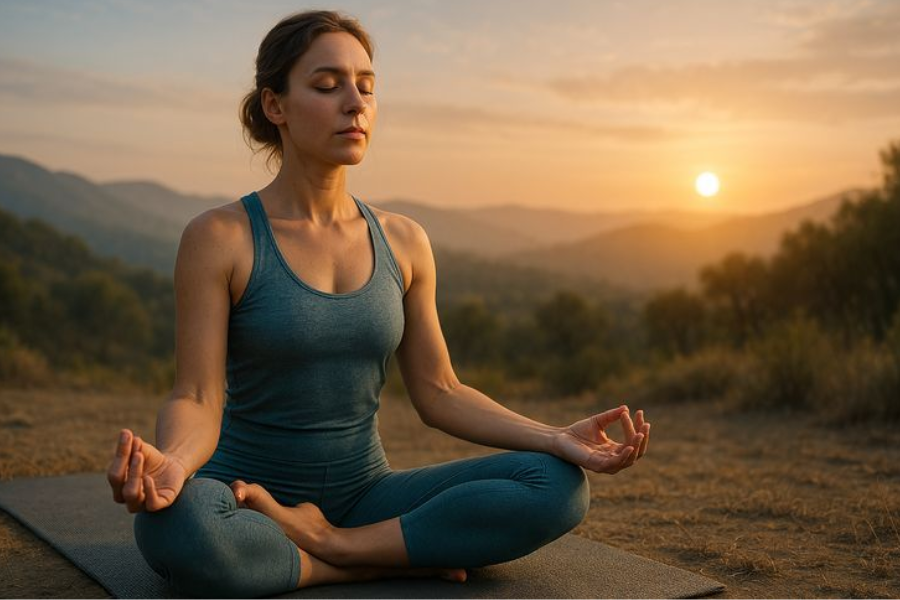
Ujjayi Breathing is a highly calming and meditative pranayama technique, also known as “victorious breathing.” The practice is characterized by a slight hoarseness in the throat or the sound of ocean waves during inhalation and exhalation. This method is considered beneficial for the respiratory system, emotions, and nervous system. Therefore, it is considered an effective method for stress management.
Method-
First, sit in Sukhasana or Padmasana, keeping your spine straight. Close your eyes and focus on your breath. Inhale slowly while slightly constricting your throat. Now, exhale with the same contraction. As you breathe in and out, feel a soft, “hoo…” sound. Practice this for 5-10 minutes.
Benefits-
Regular practice of Ujjayi:
- Breathing calms the nervous system and balances oxygen flow in the body.
- Helps reduce mental stress, restlessness, and anxiety.
- Provides mental stability by regulating the heart rate.
- Improves emotional control and increases concentration.
- Prepares the mind for meditation, leading to mental clarity and a deep sense of peace.
This Ujjayi breathing is especially useful for those who live in stressful situations and are seeking mental balance.

- Premium PU Microfiber Surface – Designed for superior grip, sweat absorption, and enhanced comfort during yoga and worko…
- Extra Large & Extra Wide – Spacious dimensions provide ample room for unrestricted movement and better stability.
- 6MM Thick Cushioning – Offers excellent joint support, reducing impact on knees, elbows, and wrists.
Yoga for Mental Health: Scientific Benefits-
Yoga for mental health is not just physical postures and exercises, but a scientifically proven, natural method of mental healing. Numerous studies have proven that yoga positively impacts mental functioning, the nervous system, and hormonal balance.
1. Reduction of Cortisol-
Yoga for mental health is considered extremely effective and important for reducing cortisol (the stress hormone). Elevated cortisol levels in the body can lead to stress, leading to anxiety, irritability, and mental fatigue. Yoga and pranayama balance breathing and relaxation, resulting in a natural reduction of cortisol.
2. Yoga’s Role in Increasing Endorphins and Serotonin-
Yoga for mental health increases the production of “happy hormones,” such as endorphins and serotonin. While endorphins lighten the mind and provide positivity, serotonin is essential for mood, sleep, and emotional balance. Thus, yoga boosts levels of these “happy hormones” and revitalizes mental energy.
3. Effects of Meditation and Mindfulness on the Brain-
Meditation and mindfulness practices within yoga for mental health calm the cerebrum and activate the cerebral cortex, which is involved in thinking and reasoning, memory, sensation, movement, decision-making, and concentration. This reduces mental clutter and allows one to think more clearly.
4. Improved Concentration, Memory, and Decision-Making-
Regular practice of yoga for mental health improves concentration, memory, decision-making, and the ability to focus. This allows for more effective study, work, and daily activities.
5. Mental Stability and Emotional Balance-
Most importantly, yoga for mental health improves mental stability. It teaches you to balance emotions, reducing sudden outbursts of anger, anxiety, or frustration. It increases peace, contentment, and ease in the mind.
Yoga for mental health is a scientific, natural, and ancient Indian practice that provides natural, safe, and long-term benefits for mental health. People of all ages can adopt it to improve their mental health.
Yoga for Mental Health: Conclusion-
Practicing yoga for mental health is essential for all people. Yoga not only strengthens the body but also stabilizes and balances the mind (mental health). Regular practice of yoga, pranayama, and meditation for mental health helps a person become stress-free, calm, and confident. Yoga is a natural and effective tool for improving mental health and bringing balance to life. It not only reduces stress and anxiety but also increases emotional stability, concentration, and mental clarity.
The connection between yoga and mental health is scientifically proven. Regular yoga practice not only reduces mental stress but also provides mental empowerment and emotional stability. In modern lifestyles, yoga for mental health is an effective and accessible tool that we can easily practice at home. Yoga is a path to mental empowerment. Regular practice keeps the mind calm, refreshed, and energized. Yoga for mental health empowers individuals to make better decisions, improve relationships, and face challenges head-on.
Incorporating yoga into daily life is crucial. Start with small steps. By increasing your practice over time, you can experience profound and long-term benefits for mental and physical health. If you’re experiencing mental unrest, anxiety, or stress, adopting yoga for mental health is a simple, safe, and effective solution. Amidst the hustle and bustle of life, 30 minutes of yoga can provide a boost to your mental health.
Ultimately, achieving mental peace and stability by making yoga for mental health an integral part of your life is the foundation for a successful and balanced life.